Developed Fit-For-Purpose AI Marketing Agents
Agents that took over an agency's link building, copywriting, content research, blogging and social posting.
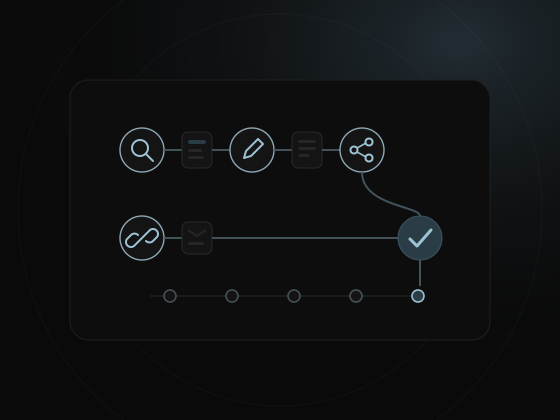
Agencies lose an enormous amount of time to work that is necessary, repetitive and completely unglamorous. Prospecting link targets. Researching what to write about. Drafting. Scheduling. None of it is hard. All of it is relentless, and it scales with client count rather than with revenue.
That was the position here. Every new client added another set of the same weekly jobs, and the team doing them was the same team that should have been doing strategy and client work.
The problem, in numbers
The numbers this study can stand behind are the outcome: 35 hours a week recovered across the team and £3,000 a month in staff cost. Everything below is how that was built, and why the output went up rather than down.
The cause was not a lack of skill. The team knew how to build links, research topics, write and post. The problem was that all four jobs were done by hand, for every client, every week, and the hours grew in step with the client list.
The approach
I started with an audit of where the team’s week actually went. That showed four distinct jobs, each with its own inputs, its own output and its own way of going wrong, so I treated them as four separate builds rather than one.
- Map the week. Every repetitive task, who did it, and how long it took.
- Split by job. One AI agent per job, each with a narrow brief, because an agent asked to do everything does all of it badly.
- Define the handoffs. Each agent passes a defined artefact to the next, so the chain can be checked at every step.
- Keep a person in charge. The agents draft, a person approves before anything goes out.
The agents
This was not one agent. It was several, each doing one job properly.
Link building. Finds and qualifies prospects, checks them against the criteria that actually matter rather than a single authority score, and drafts the outreach.
Content research. Works out what a client should be writing about and why, and produces the brief.
Copywriting. Writes to that brief in the client’s voice.
Social. Turns each published piece into posts sized for the platform, and schedules them.
Where the human stays
Approval. Every outreach email, every article and every post is reviewed before it goes anywhere. The agents remove the hours, not the judgement, and an agency that removes the judgement too will eventually send something it regrets under a client’s name.
The other deliberate constraint: each agent hands its output to the next one as a defined artefact. The researcher produces a brief, the copywriter consumes a brief. That is what makes the chain debuggable when something comes out wrong, which it will. If a draft misses the point, you can look at the brief and see straight away whether the research or the writing went wrong.
The result
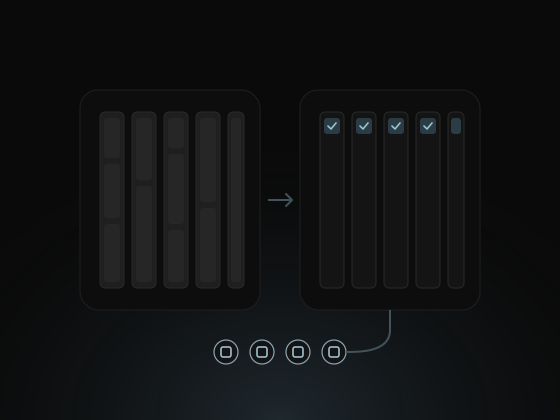
35 hours a week recovered across the team and £3,000 a month in staff cost, with the output going up rather than down, because the work now happens on a schedule instead of whenever someone finds a gap.
What this means for your business
If the same jobs land on your team every week and grow with every new client, the problem is not effort. It is that the work is done by hand when most of it could be drafted for you. Agents that each do one job, with a person approving the output, take the hours away without taking the judgement away.
It is the same audit-first approach I use everywhere: I map where your week goes, find the repetitive work, then build the agents against that. You are not left with a slide deck of recommendations.
Handing repetitive work to agents that each do one job properly is the AI automation I install for other businesses.
The research and copywriting agents are covered in more detail in the AI content case study, and the link building agent supports my SEO work. To see what it would look like for you, contact me.