MCP Server Integration For Brand Assets Storage
Giving a London agency's generative AI agents a single source of brand truth to pull from.
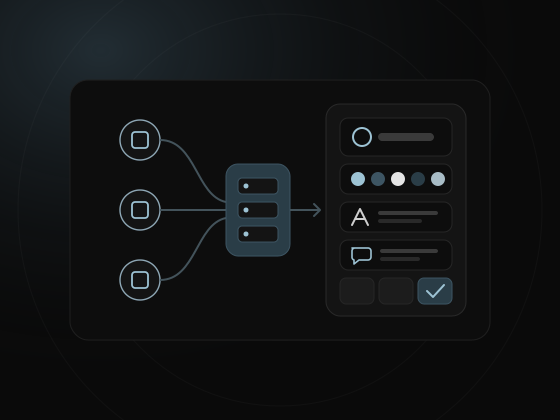
Generative AI is fast at producing something roughly right and hopeless at producing something exactly on brand. The agency was getting output that needed reworking every time: wrong logo lockup, colours close but not correct, tone drifting away from the client’s guidelines.
The reason is simple. The model had no access to the brand. It was being told about it in a prompt, and a prompt is a poor substitute for the actual assets.
The problem, in numbers
The figures this study can stand behind are the outcome: 90% less editing time on generated output and £2,500 a month saved. Everything below is how that was built.
Before the build, the editing time was the hidden cost of using AI at all. The agents produced drafts quickly, then someone on the team spent the time they had saved putting the brand back in: swapping the logo for the correct version, correcting hex values by eye, rewriting copy that had slipped out of the client’s voice. The same corrections, on every piece, for every brand.
The approach
I started with an audit of where the editing time actually went. Almost none of it was creative judgement. It was the same handful of brand mistakes, repeated, because the agents had nothing reliable to check their work against.
- List the mistakes. Every correction the team was making by hand, grouped by cause.
- Find the source of truth. Work out where the approved version of each asset already lived, so the agents read from the same place as the humans.
- Build one way in. An MCP server over that store, rather than a separate prompt for every brand.
- Keep a person on the creative. The agents get the brand right, a person still decides whether the work is good.
What an MCP server changes
MCP gives an AI agent a defined way to reach a real system rather than relying on whatever was pasted into its context. So I built one over the agency’s brand asset store.
The agents can now query it directly: the approved logo files and the rules for using them, the exact palette, the typefaces and their weights, the tone of voice guidelines, and previously approved work as reference.
The agent is no longer guessing at the brand. It is reading it, at the point of generation, from the same place the humans do.
Why this beats a bigger prompt
Three reasons, and they compound:
- It stays current. Update an asset in the store and every agent uses the new one immediately. Nobody has to remember which prompts to go and edit.
- It scales across clients. The agency runs many brands. Prompt-stuffing means maintaining a separate prompt per brand and hoping nobody mixes them up.
- It is auditable. You can see which asset an agent pulled, which matters when a client asks why something came out the way it did.
The result
90% less editing time on generated output and £2,500 a month saved. The work that remains is genuine creative review rather than correcting the same brand mistakes over and over.
What this means for your business
If your team uses AI to produce work and then spends the saved time fixing it, the problem is not the model. It is that the model cannot see the things it is meant to follow. Give it direct access to the approved assets and the corrections stop being the job.
It is the same audit-first approach I use everywhere: I find where the time is really going, then build against that. You are not left with a slide deck of recommendations.
Connecting agents to the systems they actually need is a large part of AI Agent Development.
The agents that read from a store like this are the ones described in the AI marketing agents study. For where to begin, see AI consulting for small businesses or contact me.