Ask a small business owner how they use AI and you’ll usually hear the same answer: it writes their emails. That’s a real saving. It’s also the smallest possible version of what’s on the table.
The copilot ceiling
A copilot only works when a human is sat in front of it. That means every hour of output still costs an hour of attention. You’ve made your team faster at the tasks they were already doing, and left the shape of the business exactly as it was.
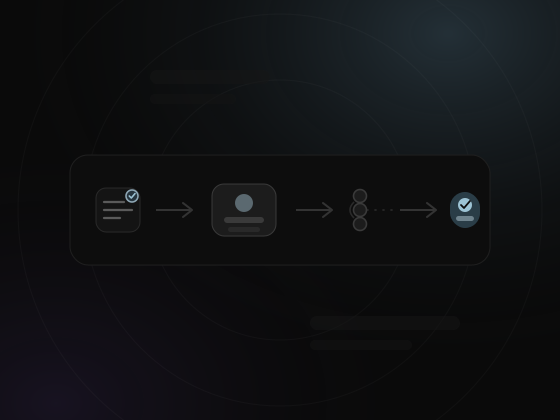
The businesses I audit that see the biggest jumps aren’t the ones with the best prompts. They’re the ones that picked a process nobody enjoyed, such as lead follow-up, content research or monthly reporting, and handed the whole thing over, end to end, with clear rules for when to escalate to a person.
Automation that needs supervising isn’t automation. It’s a second job.
What autonomy actually means
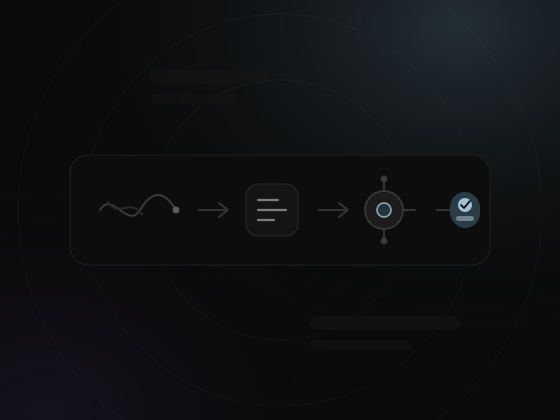
An autonomous agent has three things a chat window doesn’t: a trigger, access, and a definition of done. Something happens in your business: a form is filled, a review is posted, a stock level drops. The agent has permission to act in the tools where that matters. And it knows what a finished job looks like well enough to stop.
Get those three right and the work happens whether or not anyone opens a laptop. Get them wrong and you’ve built a very confident intern with your CRM password.
Where to start
Start with the process that annoys you most, not the one that looks most impressive in a demo. Annoyance is a good signal: it usually means the task is repetitive, rule-based and already well understood by whoever does it. Those are exactly the conditions an agent needs.
One client’s follow-up sequence used to depend on a person checking a shared inbox twice a day. I replaced the checking, not the writing. Response times went from hours to minutes and the close rate moved with it, without touching the sales copy at all.
The uncomfortable part
Autonomy means accepting that some work will be done in a way you didn’t personally approve. That’s the trade. You manage it with logging, limits and review, the same way you would manage a new hire, and you accept that the goal is a good average, not a perfect individual output.
The businesses that make peace with that get their weeks back. The ones that don’t will keep paying an hour of attention for every hour of output, and wondering why AI didn’t change much.
If you would rather have the AI agents built and installed than work out the sequencing yourself, that is what an AI Makeover is.