Most month ends include a job where someone sits with a bank statement on one side and the ledger on the other and ticks things off, line by line. Nearly every line matches. The hour that matters is spent on the handful that do not, but the person cannot know which handful until they have checked all of them. That is why the task takes days, and it is also why it automates so well. Here is how to automate the reconciliation process without handing your books to something you cannot check.
Why reconciliation is a good job to automate
Reconciliation has three properties that suit automation. It is repetitive, because the same checks run every month. It is rule-shaped, because a match usually comes down to an amount, a date and a reference. And the outcome is easy to verify: either the two sides agree or they do not.
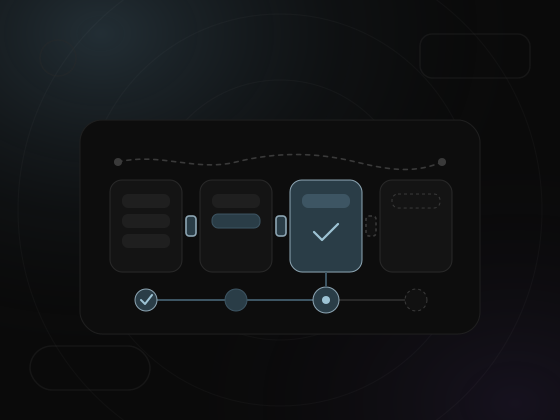
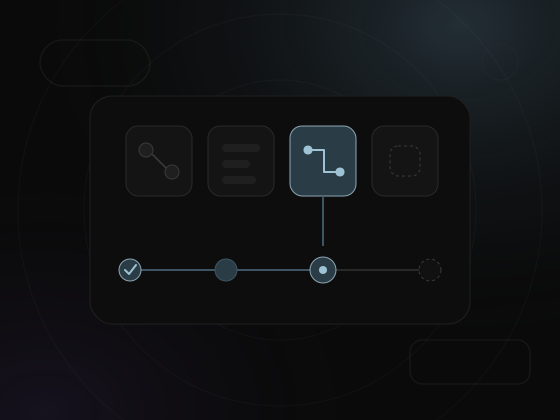
The common pattern across guides to automated bank reconciliation is the same three stages: connect the bank, match the records, review the exceptions. The software does the first two. A person does the third, and that is the only part that needs judgement.
A note on numbers. You will see vendors quote reductions in manual work of 75% or more. Treat those as marketing, not benchmarks. How much time you save depends on how clean your data is and how many of your transactions are predictable.
The three stages in plain English
1. Get the bank data in without downloading anything
In the UK this normally means an Open Banking connection, the regulated framework that lets an authorised service read your bank data with your consent. Open Banking Limited explains how it works. Most accounting packages already offer bank feeds built on it. If yours does, you have this stage for free. If you are still downloading statements and importing them, that is the first thing to fix.
2. Match on rules, from strict to loose
A good setup applies matching rules in order, strictest first:
- Exact: same amount, same reference, dates within a day or two.
- Known patterns: the same customer or supplier has been matched the same way before.
- One to many: a single bank receipt that clears several invoices, or one invoice paid in two instalments.
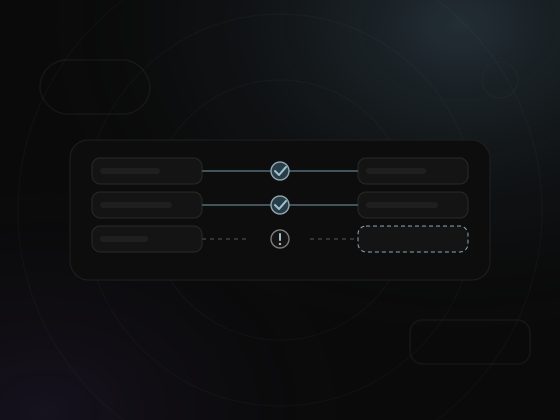
Anything that clears a rule is matched. Anything that does not is left alone. The important design choice is that the system should never force a match. A wrong match that looks tidy is worse than an honest exception.
3. Review only the exceptions
What is left is a short list: a bank fee nobody recorded, a payment from a different account, a refund with no matching credit note, a transfer where the bank line carries no useful name. Each needs a person to decide. Exception-only reconciliation is the name this approach goes by in finance teams: people review what the rules could not settle, not everything.
An illustration of the time difference
To make this concrete, here is a hypothetical, not a client result. Imagine a business with 600 bank lines a month. If 90% match on rules, the person reviews 60 lines instead of 600. At roughly half a minute a line to check and a few minutes to resolve each real exception, that is a morning’s work shrinking to something close to a coffee break.
Your numbers will differ. The match rate is the figure that decides everything, and you cannot know it until you run your own data through the rules. That is why the first step is always a measurement, not a promise.
What to set up before you trust it
Automation amplifies whatever data it is given, so a few things need to be right first.
- Consistent naming. If a customer exists in your system under three spellings, the rules will treat them as three customers.
- A fixed way of categorising income and expenses. Decide it in advance and write it down.
- A confidence threshold you do not quietly move. It is tempting to loosen the matching threshold when the match rate looks low. Doing that weakens the control without anyone approving the change. Any change to the rules should be a deliberate decision with a name against it.
- A log of what was matched and why. If you cannot see how a line was matched, you cannot defend it to an accountant or an auditor.
Track the right numbers
The match rate is the headline figure, but it can mislead. A rate that rises because the rules got looser is not an improvement. Better measures:
- The number of exceptions each month, and how old the oldest one is.
- How many auto-matches a person later corrected. If this is not zero, the rules need tightening.
- The time from month end to a closed reconciliation.
Where AI helps and where it does not
Plain rules handle most of the work, and they should. Where an AI agent earns its place is on the exceptions: reading a messy bank reference, suggesting the likely customer, drafting the query to send, or flagging a pattern such as the same fee appearing every month. It suggests and a person approves. Some exceptions cannot be solved by either, because the information is simply missing from the bank line, and that is fine. The system’s job is to make that missing information visible quickly.
I would be wary of anyone who proposes letting a model post entries to the ledger unsupervised. The upside is small and the downside is a set of books nobody trusts.
How I would approach it
I work as a single freelance consultant, so the person who audits your process is the person who builds it. I start with an audit of how the job is done today: where the data comes from, which rules a human applies without thinking, and what the exceptions actually are. You get an action plan before anything is built, so you know what is being installed and why.
I have built this kind of automation for other work. In one case study, purpose-built AI agents took over an agency’s repetitive marketing tasks and saved 35hrs a week. In another, an AI receptionist qualified website enquiries so a team only handled the ones ready for a price. Neither is a finance project, and I would not present them as one, but they show the same pattern: let the system handle the predictable bulk and keep a person on the exceptions.
If you are weighing up who should build it, my post on what an AI automation consultant actually does sets out the process in detail. Reconciliation sits inside the wider audit and implementation work I describe on the AI Makeover page, and if you would rather talk it through first, you can get in touch for a consultation call.